New Mazda CX-70 for Sale Near Summerville, SC


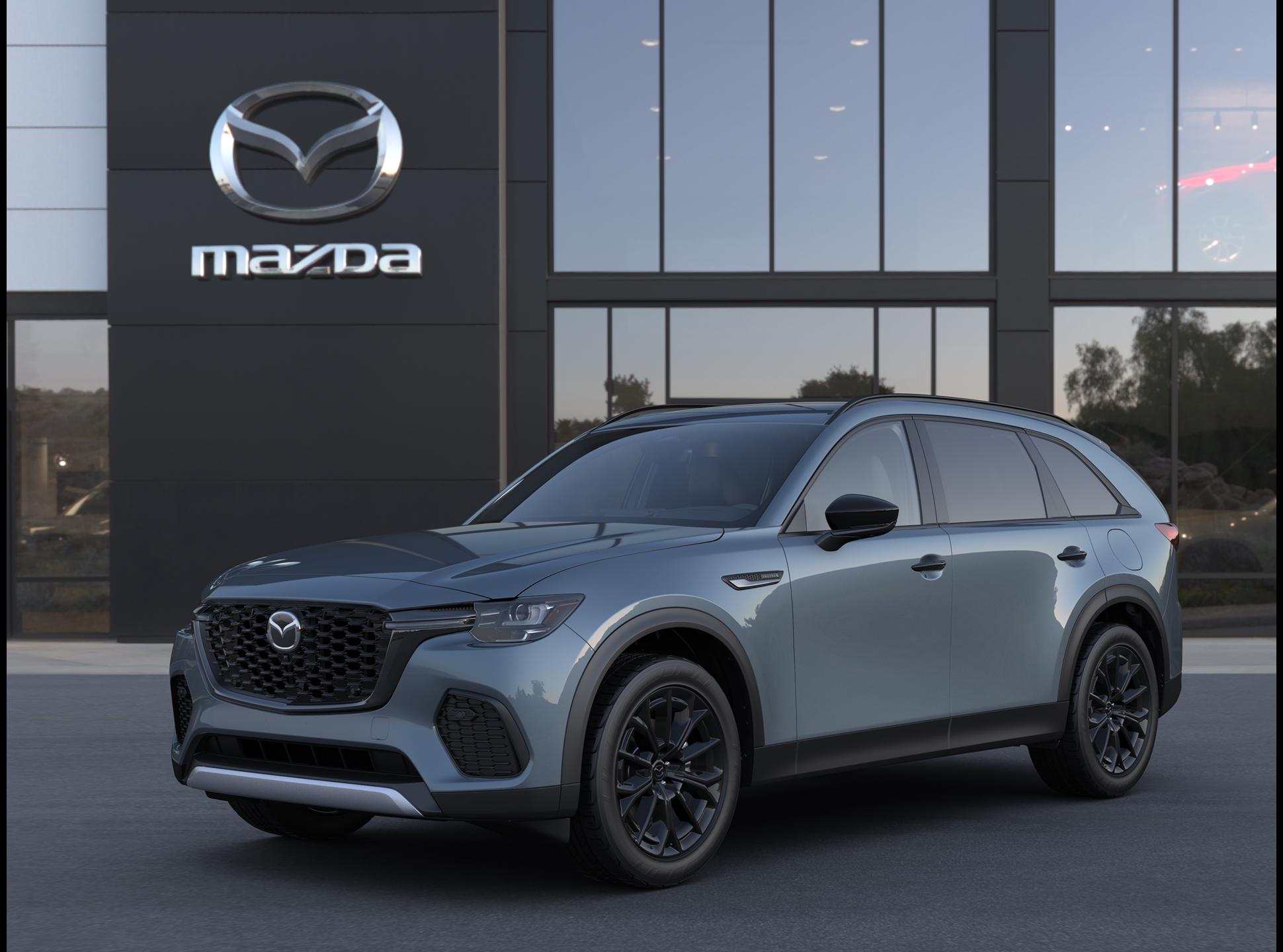

Frequently Asked Questions About the Mazda CX-70 near Summerville, SC
Why would I buy a large SUV with only two rows?
Because a third row you rarely use costs you cargo space every day of the year. The CX-70 takes the body of a large SUV and gives the rearmost space back to luggage instead of seats. For a household of four or fewer that trade is almost always the right one. Space used every week beats space used twice a year, and this vehicle is built around that arithmetic.
How much does it actually hold behind the second row?
A great deal more than a compact SUV and more than a three row vehicle with its rearmost seats folded, because the floor was designed for cargo instead of accommodating a mechanism. Bring your own luggage and see. That comparison is far more convincing than a published volume. Load the things you genuinely carry and the decision stops being a matter of opinion.
Is it awkward to park compared with a compact SUV?
It is longer, and you notice that in an older downtown space, not out on the road. Camera coverage handles a good deal of it, though anybody stepping up from something considerably smaller should take an unhurried drive first. Most drivers stop thinking about the length within a fortnight. The ones who never do are usually parking somewhere genuinely tight every single day.
How does it compare with the CX-90?
They share the same broad footprint and answer different questions. The CX-90 gives the rear space to a third row of seats and the CX-70 gives it to cargo. Count how often you have carried more than four people in the last year and the choice generally makes itself. Households consistently overestimate that figure, which is worth bearing in mind as you answer.
Is a vehicle this size sensible for two people?
For plenty of couples it is, particularly ones who travel with dogs, bikes, or a lot of luggage. The size buys comfort over distance and space for whatever comes along, rather than seats nobody uses. It costs more to run than a compact and there is no way around that. Pricing fuel, tires, and insurance before you commit turns that from a surprise into a decision.
Have Additional Questions?
The CX-70 question is nearly always the same one: seats or cargo in the back of the vehicle.
Say how many people ride regularly and what travels with them, and it resolves fast.
Where the third row would genuinely get used, Stokes Mazda will steer you to the CX-90 instead.
A Large SUV That Deliberately Skips the Third Row
Most large SUVs assume you want seven seats and arrange everything else around that assumption. The CX-70 starts somewhere else entirely: same footprint, same road presence, and the rearmost space handed to cargo instead of to a bench nobody sits on.
That decision sounds like a limitation and works as a feature. A third row costs you floor depth, a flat load area, and a mechanism that intrudes even when folded, every single day, in exchange for seats used a handful of times a year.
- A third row costs floor depth and a flat load area every day of the year in exchange for seats a great many households use only a handful of times
- A vehicle without a third row carries less weight and fewer mechanisms to work loose, which shows up quietly across years of ownership rather than announcing itself on a test drive
- Households of four or fewer are the clear case here, and that describes a far larger share of large SUV buyers than the market admits
The honest limitation is that it seats what it seats. A household that carries five or six people even occasionally will find itself taking two vehicles, and that gets old faster than a shallower load floor would have.
Count the times last year you carried more than four people. That number decides between these two vehicles better than any other question. Households consistently guess it high, which is worth knowing before you answer.
What You Get Behind the Second Row
The cargo area is the whole argument for this vehicle, so it deserves examining in person instead of reading about. The floor sits low and flat, the opening is wide, and there is no folded seat mechanism eating into the useful depth.
That combination matters most for awkward objects and hardly at all for heavy ones. A tall box, a folded stroller alongside luggage, or a dog crate that has to sit level all benefit from a shape that was designed rather than left over.
- A low flat floor with no folded mechanism underneath is what separates a designed cargo area from one that is simply the space left over
- Awkward objects benefit far more than heavy ones, so bring along the tall or oddly shaped item and leave the heaviest one where it is
- Check whether the load cover stows somewhere inside the vehicle, because one that has to be left at home defeats the purpose of having it
Load height is the counterweight. Lifting something heavy into a large SUV asks more of you than a wagon would, and anybody with a bad back should test that before anything else.
Load your own cases in and shut the tailgate on them. No published volume figure conveys what those few seconds will. Depth and shape are what defeat a load, and neither one is printed anywhere.
Long Trips With Two, Three, or Four People
This vehicle makes most sense to households that travel. A weekend up the coast, a run to the mountains, or a drive to see family several states away all reward a large, quiet SUV with genuine luggage room in a way a commute never will.
Second row comfort is what separates a good long distance vehicle from an adequate one. There is proper space back there, and passengers in it are not being tolerated.
- Genuine second row space means passengers on a long drive are accommodated rather than merely tolerated, which changes how often people volunteer to come along on the longer trips
- A quiet cabin at cruising speed is what stops a long drive being tiring, and it matters more than any figure describing how quickly it accelerates
- Everybody plus luggage plus a dog is the load that defeats a compact SUV, and it is the exact case this vehicle was arranged around
The other thing long trips expose is seat design. A seat that feels supportive during a showroom sit can be wrong three hours in, and there is no way to discover that without driving properly.
Ask for a route with real distance in it, not a loop around the block. This is a vehicle bought for the long drives. Judging it on a lap of the neighborhood tests none of what you are paying for.
CX-70 or CX-90, and How to Tell
These two are the same size and answer opposite questions, which makes the decision unusually clean once you frame it correctly. It is not about budget or trim and it is entirely about what occupies the back of the vehicle.
The trap is buying the third row as insurance. Households do it constantly, use it twice, and spend the rest of the ownership with a shallower cargo floor and a mechanism in the way.
- Buying a third row as insurance is the most common mistake in this class, and that particular insurance premium gets charged daily, not once a year
- Ask how each configuration tends to sell on the used market, since that affects what the vehicle costs you across the whole of your ownership
- Anyone who genuinely carries a fifth and sixth passenger even monthly should stop reading about the two row version and go look at the other one
There is a legitimate middle case. Households expecting children, or ones who host visiting family for weeks at a time, sometimes buy the seats for a future they can see coming. That is a reasonable bet rather than a mistake.
Be honest with Stokes Mazda about whether that third row is a need or a comfort blanket. Both answers are respectable, and only one of them costs you cargo depth forever. Insurance you never claim on is still insurance you paid for.
Big SUV Ownership Around Summerville
A large SUV suits the way this area has spread out. Households here cover genuine distance between home, work, school, and everywhere else, and the destinations are not close together on any map.
The run up US-17A toward Moncks Corner counts as an ordinary weekend errand for a lot of people, not an expedition. A vehicle that makes that drive unremarkable is doing most of what anybody needs.
- Households here cover real distance between home, work, and school, and none of those destinations sit close together on a map, whatever the drive time suggests
- Fuel consumption on a vehicle this size gets felt weekly rather than annually, and it deserves pricing honestly before the purchase instead of discovering it afterward
- Older downtown parking is where the length registers, so try a space down there before deciding that the length is never going to bother you on an ordinary afternoon
The counterweight is the historic center of town. Those streets were laid out long before vehicles this size existed, and anybody heading in regularly should factor that in honestly.
Drive it where you actually go, not where it flatters. A large SUV feels wonderful on an open road and is judged in a parking space. The older part of town is where that judgment actually gets made.
Bring the passengers to Stokes Mazda, bring the luggage as well, and let the back of the vehicle settle whether you want seats there or space.