New Mazda CX-50 Hybrid for Sale Near Summerville, SC




Frequently Asked Questions About the Mazda CX-50 Hybrid near Summerville, SC
What does the hybrid change about driving it?
Very little that you have to think about, which is the whole idea. It pulls away smoothly and quietly from a standstill, the transition between power sources happens without asking anything of you, and you fuel it at any ordinary pump. Nothing about the routine differs from the gasoline version. Fueling, servicing, and daily driving are identical to what the rest of the range asks of you.
Where does the fuel saving actually turn up?
In slow, interrupted driving rather than on the open road. School runs, the crawl through a light sequence, and errands across town are where a hybrid earns its keep. Somebody whose week is mostly steady highway miles will see a much smaller difference. The gain is largest in stop start traffic, which is precisely where a conventional engine is at its worst.
Is there anything extra to maintain?
Not in any way that changes your year. The service list looks familiar and brake components tend to last unusually well because the system recovers energy instead of using friction to shed speed. The battery carries its own separate and longer coverage term. Ask to see that written down rather than taking anybody's summary of it, ours included.
Does it give up any of the CX-50 character?
The body, the roof, the cargo area, and the general intent are unchanged. What gets added is a quieter departure and a smaller bill at the pump across the driving nobody enjoys. Put the two versions side by side and drive them one after the other; the differences surface almost immediately. Ten minutes is genuinely enough to know which of the pair you would rather own.
Who genuinely should not bother with the hybrid?
Anybody covering long, steady highway distances and very little else. The premium takes longer to recover when the conditions that favor a hybrid barely occur in your week. You will hear that said here rather than after the paperwork. An honest answer that costs a sale is worth more than a customer who feels misled a year later.
Have Additional Questions?
Hybrid questions almost always reduce to one thing: what kind of driving fills your week.
Describe a normal five days and the answer stops being a guess very quickly.
If the gasoline CX-50 suits you better, Stokes Mazda has no reason to say otherwise.
What the Hybrid Changes and What It Does Not
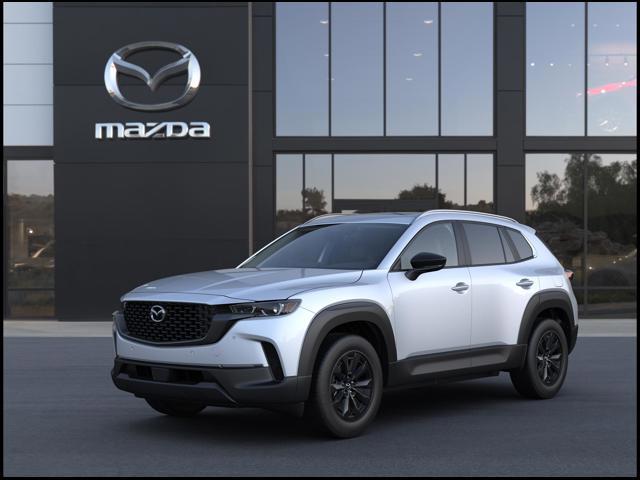
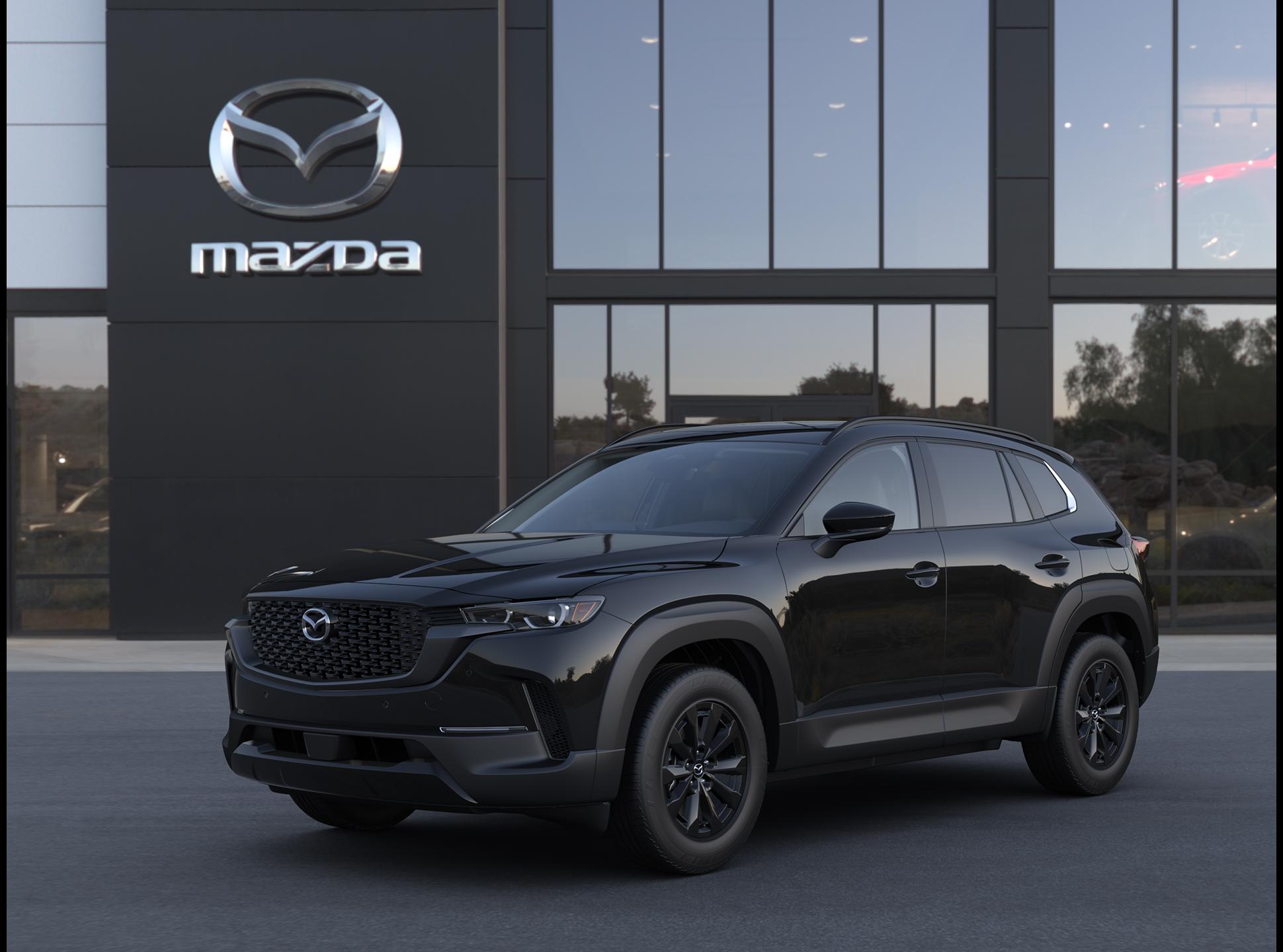
The useful way to think about this version is by subtraction. Everything that gives the model its character stays exactly where it was, and one thing gets added underneath. Nothing about the shape, the roof rails, the load space, or the purpose of the vehicle has moved.
What the addition buys is quieter, smoother movement at low speed and lower consumption in the driving that eats fuel. It asks nothing of you in return, which is the part people find hardest to believe until they drive one.
- Check which trims the hybrid is offered in before settling on equipment, because that list can differ from what the gasoline version allows and narrow your options unexpectedly
- Pulling away from a standstill is quieter and smoother, which is the difference owners mention long before they ever get around to mentioning the fuel bill
- The system manages itself completely and needs no habit, no routine, and no decision at all from whoever happens to be behind the wheel
There is a price difference and it is real. Whether it comes back to you depends entirely on what your week looks like, which is a question about you rather than about the vehicle.
Drive both versions on the same afternoon if that can be arranged. The gap is small on paper and easy to feel from a standstill. By the end of the road most people have already picked their side.
Where the Savings Actually Show Up
Hybrids earn their keep in the driving nobody looks forward to. Crawling traffic, a long sequence of lights, and short errands where the engine never properly settles are precisely the conditions a conventional vehicle handles worst.
Steady highway running is the opposite case. A conventional engine is already efficient at a constant speed, so the advantage narrows considerably and the arithmetic changes with it.
- Crawling traffic and short errands are where the hybrid side earns its keep, and both happen to be the driving people look forward to least
- Fuel prices move and the payback moves with them, which is why a calculation somebody ran last year is not the one that applies now
- Add up the share of your week spent below thirty miles an hour, because that fraction predicts the saving far better than your total mileage ever will
The honest arithmetic depends on three things: how far you drive, what proportion of it is slow, and how long you keep vehicles. None of those is knowable from a brochure.
Describe a normal week and the sums can be run properly. A conclusion announced without those inputs would be worthless. Anybody quoting a payback period without asking about your week is guessing.
Living With It Day to Day
The most common surprise is how ordinary it is. There is no cord, no new routine, and no decision to make at any point, and the vehicle simply behaves like a quieter CX-50 that visits the pump less often.
The quietness deserves its own mention. Moving off in the early morning without waking anybody is a small pleasure that owners bring up constantly and that no specification page conveys.
- There is no cord and no new habit to build, so ownership feels identical to running a conventional vehicle from the very first morning onward
- Regenerative braking changes how the pedal feels underfoot, and a short drive is all it takes to know whether that sensation suits you or irritates you
- Fuel stops become less frequent rather than disappearing, which changes the rhythm of a week considerably more than the size of any single bill does
Cabin space is unaffected, which is not true of every hybrid in this class. Buyers who have read about batteries eating into cargo areas can stop worrying on this one.
Put your own load in the back before deciding. That answers the cargo question faster than any reassurance from us could. Buyers arrive braced for a compromise that this version does not actually ask of them.
Servicing a Hybrid Compact SUV
Ownership turns out simpler than the anxiety around it. The maintenance list barely differs from the conventional version, and a couple of items age more gently because the system shares the workload.
Brakes are the clearest example. Energy recovery takes a good deal of the speed out before the friction brakes get involved, which is why those components last as long as they do.
- Ask when the brake fluid falls due, because fluid ages on time instead of on use, and unusually light brake wear disguises that completely
- The battery carries a separate and longer coverage term than the rest of the vehicle, with the qualifying conditions written into the delivery paperwork you sign on the day
- Keeping the service record in one place matters more on a hybrid, because used buyers of these read a maintenance file considerably harder than buyers of anything conventional
The high voltage side is the part that wants specific training and proper equipment, and both sit in this building. Nothing about owning one sends you somewhere unfamiliar for a routine appointment.
Ask what the first few services actually involve before you buy. The list is shorter than most people brace themselves for. Hybrid anxiety is mostly inherited from a generation of vehicles that has long since passed.
Who Should Take the Hybrid and Who Should Not
The clearest case is a household doing a lot of short, interrupted local driving and keeping vehicles a long time. School, work, errands, and a weekend trip out of town describe most of Summerville, and that pattern suits this version well.
The weaker case is somebody covering long steady distances and replacing vehicles quickly. Neither condition that favors a hybrid is present, and the premium sits there without doing much.
- Short interrupted local driving combined with long ownership is the profile where this version repays its premium soonest, and it is a common enough pattern around here
- Long steady distances and quick replacement cycles are the combination where the gasoline version is simply the better buy and nobody should pretend otherwise
- Errands along US-78 and the school run around Knightsville are exactly the slow, interrupted driving where a hybrid is quietly working hardest on your behalf
A middle group could reasonably go either way, and what decides it for them is usually how many years the vehicle stays in the driveway. Somebody keeping it a decade rarely regrets the hybrid.
Be honest about the years you tend to keep a vehicle and how slow your average mile really is. Those two answers between them settle this. Neither of them is a question about the vehicle at all.
Describe a normal week to Stokes Mazda, drive both versions of the CX-50, and expect a straight answer even when it points at the gasoline one.