



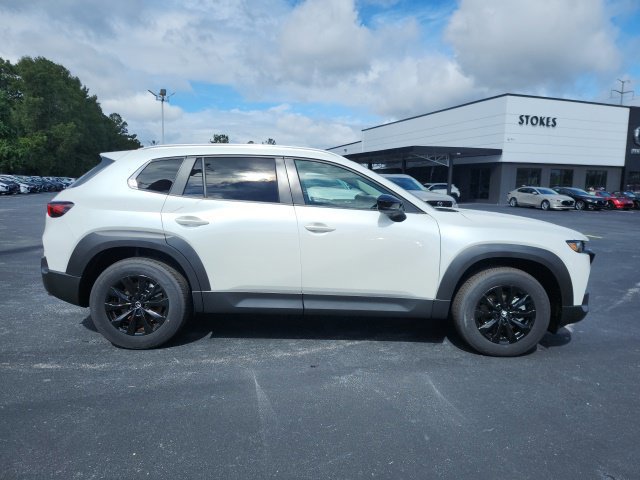
Frequently Asked Questions About the Mazda CX-50 near Summerville, SC
What does the CX-50 do that the CX-5 does not?
It is set up for a different kind of weekend. The proportions are lower and wider, the roof is built to carry things, and the whole vehicle is arranged around gear and surfaces that are not pavement. On a commute the two feel closer than the styling suggests. Where they separate is the moment the surface under the tires stops being smooth.
Can you really put a rack and a load on the roof?
Yes, and it was designed with that in mind rather than treated as an afterthought. Bikes, boards, and a cargo box are the common requests here. Ask what a given vehicle is already fitted with before you start pricing hardware. Buyers regularly pay twice for something that was already sitting on the vehicle in front of them.
Is it capable enough for a dirt road or a boat ramp?
For the kind of surface people around here actually meet, comfortably. Rutted tracks, a gravel launch, and a wet field on a Saturday all sit comfortably within its brief. Serious off road work is outside its brief, and hardly anybody shopping for one is asking it to go there. Unpaved parking, a wet field, and a gravel lane are the realistic tests, and it takes all three without drama.
Do the bigger wheels hurt the ride?
They change it, and how much depends on which set is fitted. Larger wheels with less sidewall firm things up and cost more to replace, and the smaller ones ride more softly. It is worth deciding that on a drive rather than on looks alone. Wheel and tire choice alters how the vehicle rides more than any other item you will be asked about.
Which of the two compacts should I be looking at?
Answer one question honestly and it decides itself: do your weekends leave pavement or not? If they do, the CX-50 was built for you. If they never have, the CX-5 gives you a smoother ride and easier parking for the same money. Neither answer is wrong, and being honest about your weekends is what makes the decision straightforward.
Have Additional Questions?
CX-50 buyers usually arrive with a specific activity in mind rather than a general idea about SUVs.
Name the gear and where it goes, and the answer covers racks, tires, and whether the vehicle even suits you.
Where the CX-5 would serve you better, Stokes Mazda has no reason to talk you out of it.
What the CX-50 Changes Against the CX-5
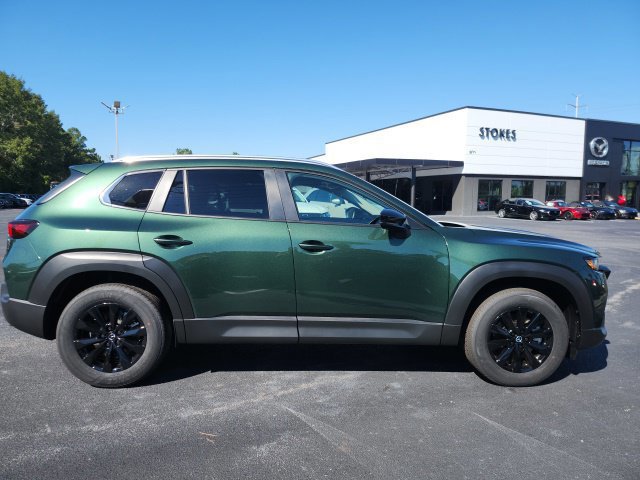
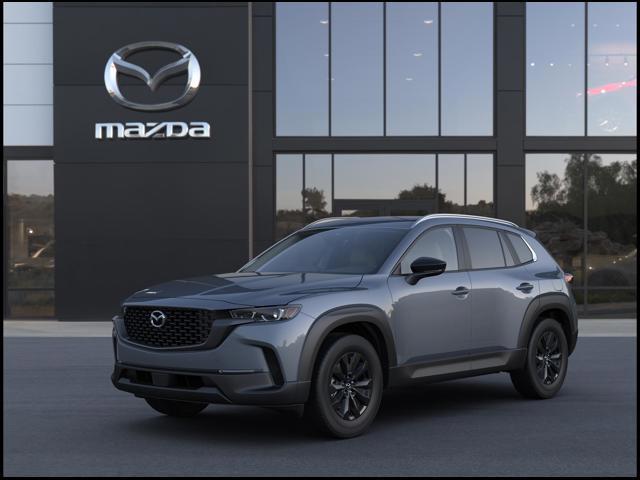
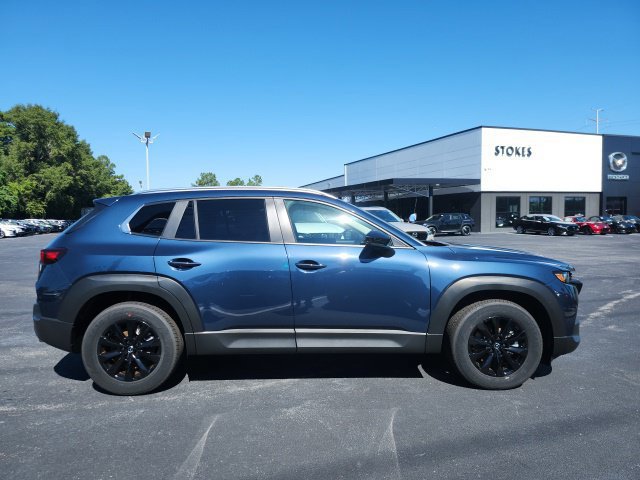
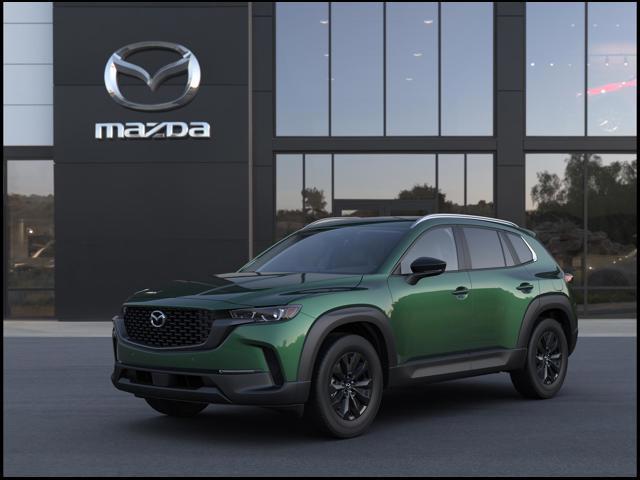
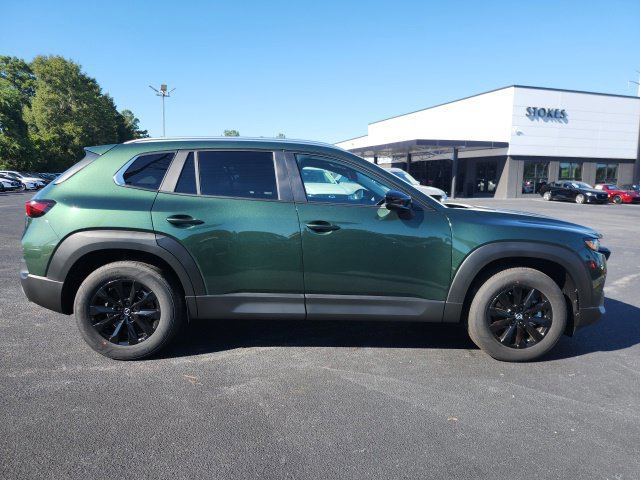
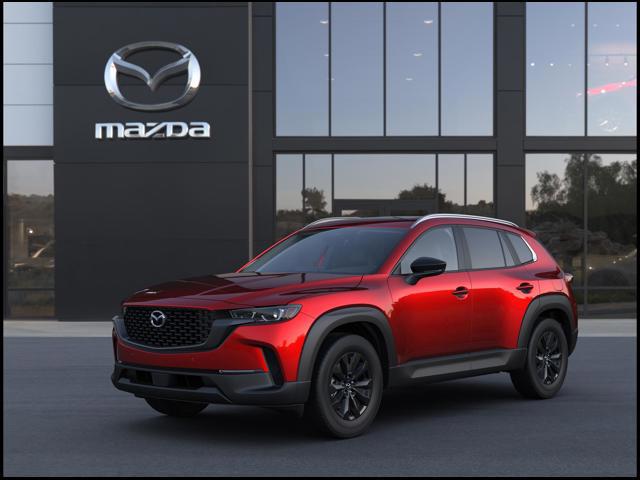
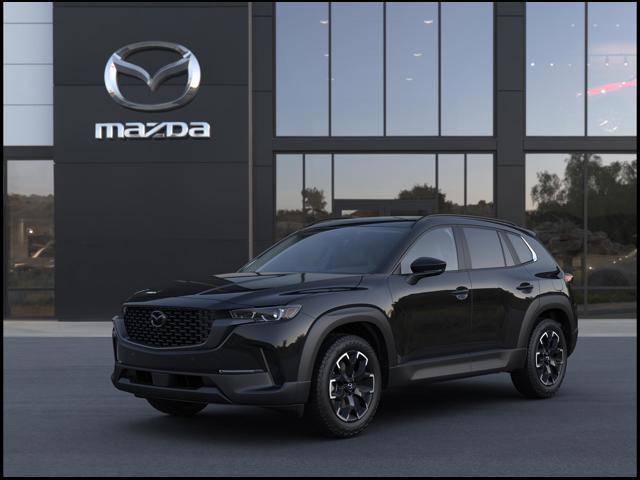
These two occupy roughly the same footprint and were built for different weekends. The CX-50 sits lower and wider, which sounds like styling and turns out to be the point: a wider track and a longer body give it a planted feel on loose surfaces.
The roof is the other genuine difference. It was designed to carry things from the outset, which is a different proposition from a roof that merely accepts a rack once you have bolted one on.
- The lower and wider proportions read as styling and function as engineering, giving the vehicle a planted feel once the surface stops being smooth and the ruts start
- Ground clearance and approach angles matter less on a vehicle like this than most buyers assume, and the tires fitted matter a great deal more
- On a commute the two compacts feel far closer than the exterior styling implies, so do not assume the difference shows up every day when most of your driving is on pavement
What you give up is a little of the CX-5's smoothness and a little parking ease. Neither is dramatic and both are noticeable if you drive them back to back. That comparison is the fastest way to settle this.
Ask which one the vehicle in front of you is set up to be. Two compacts of the same size can be aimed at completely different owners. The badge on the tailgate tells you far less about that than the tires do.
Carrying Gear on the Roof and in the Back
Most CX-50 buyers have something specific they need to move, and it is rarely groceries. Bikes, boards, a kayak, camping equipment, and dogs come up constantly, and each one asks something different of the vehicle.
Roof loads are the part worth planning before delivery. Crossbars, a box, and mounts for whatever you carry all fit more cleanly at purchase, and getting the order right saves buying the same bracket twice.
- Crossbars, a cargo box, and dedicated mounts go on far more neatly at the point of sale than they do in a driveway months afterward
- Anything that comes back wet or muddy argues for a liner and rubber mats, and both are far cheaper than replacing carpet later on or explaining the smell to a buyer
- Measure the object you actually carry before choosing a rack, because the mount that suits a bike is not the one that suits a board
Inside, the cargo area is arranged to be hosed down in spirit if not in fact. Surfaces expect abuse, and a liner turns the floor into something you stop worrying about entirely.
Bring the gear itself if that is at all practical. Fitting it once beats three conversations about whether it will go. Nobody has ever regretted arriving with the awkward item in the trunk.
Tires, Wheels, and Surfaces That Are Not Pavement
Tires decide more about how a vehicle behaves off pavement than anything else on the order sheet, and they are the part buyers think about last. A road biased tire on a wet clay track will disappoint you regardless of what the vehicle underneath is capable of.
Wheel size is tangled up in the same decision. Larger wheels with less sidewall look sharper and transmit more of the surface, while smaller ones absorb ruts and cost less to replace.
- Tires determine behavior on a loose surface more than anything else you can specify, and they are the item buyers consider last of all, usually after the wheels have already been chosen
- Less sidewall looks sharper and transmits more of the surface into the cabin, so the wheel choice is a ride decision dressed up as a styling one
- Ask what a replacement set costs at the size fitted, since that expense lands all at once and varies more than people anticipate between one wheel size and the next
What the vehicle handles depends on how it was built as well. Rather than quoting the model in general, we read the capability off the specific vehicle you are standing beside.
Describe the worst surface you drive with any regularity. That answer decides the tire before it decides anything else. Everything else about capability follows from what is touching the ground.
Weekends Out Past the Edge of Town
Summerville sits on the edge of a great deal of open country, and that fact alone explains a good deal of why this vehicle does well locally. The upper reaches of the Ashley River, the swamp country west of town, and the back roads toward Ridgeville are all inside an easy morning.
Those places involve unpaved parking, wet ground, and a load coming home dirtier than it left. Nothing there is extreme, and every bit of it punishes a vehicle built purely for pavement.
- A hose and a rubber cargo liner turn a filthy homecoming into a short job, which is the difference between using a vehicle and protecting it
- Running out along SC-61 toward Middleton Place is scenic without ever being demanding, which is precisely the sort of road this vehicle was tuned for
- Back roads toward Ridgeville turn to loose surface without warning after heavy rain, and that is where tire choice quietly proves itself or fails to
The honest position is that most owners never approach the limit of what the vehicle can do. That is not a criticism; the margin is what makes an ordinary wet Saturday uneventful rather than interesting.
Take one somewhere unpaved before you sign anything. Nothing about a showroom floor tells you how a vehicle behaves on loose ground. Ask for a route that includes something other than fresh asphalt.
Choosing Between the Two Compacts
This decision comes up on almost every CX-50 conversation, and it deserves a straight framework rather than a sales pitch. The vehicles cost similar money and suit different lives.
Count how many weekends in the last year involved a surface that was not paved, gear on a roof, or something wet going into the back. If the answer is small, the smoother vehicle is the better buy.
- Count the weekends last year that involved loose ground, a roof load, or something wet in the back, and let that number settle the question
- Buying for the life you actually lead beats buying for the one in the brochure, and that applies more here than anywhere else in the range
- Somebody who never leaves pavement gets a smoother ride and easier parking by choosing the other compact, and gives up nothing they use in the course of an ordinary year
Plenty of people buy the CX-50 knowing they will rarely stretch it, and that is a legitimate choice too. Wanting the vehicle you like is allowed, so long as nobody pretends it is a practical decision.
Tell Stokes Mazda which of those you are and it gets worked with. Either answer is perfectly defensible, and just one of the two involves arithmetic. Wanting the vehicle you like is allowed so long as nobody calls it a practical decision.
Bring the gear, name the surfaces, and drive both compacts on the same afternoon, and the right one will separate itself quickly.